Antalya, Türkiye — November 16, 2026
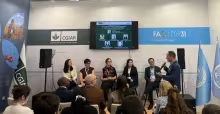
The China–Brazil Green Food Value Chain Platform, in partnership with the Brazilian Business Council for Sustainable Development (CEBDS), co-hosted the international panel From Climate Pathways to Farm-Level Action: Trade, Finance and Agrifood Value Chains, held at the Food & Agriculture Pavilion during COP31.
Bringing together research institutions and private-sector representatives, the session explored how international trade, scientific cooperation, and sustainable finance can help translate climate commitments into practical action across agricultural value chains, particularly in the context of Brazil–China trade relations.
The discussion brought together Dr. Kevin Chen (IFPRI), Camila Estevam (FGVAgro), and Dr. Jieying Bi (CIAR–CAAS), representing the Platform's three partner institutions. Their contributions offered complementary perspectives on market incentives, scientific evidence, and opportunities for international cooperation to advance low-carbon agrifood value chains.
The panel also featured Fernanda Monteiro, Director of Climate and Energy at CEBDS, and Juliana de Lavor Lopes, Sustainability Director at AMAGGI, bringing perspectives from business and agricultural supply chains. The discussion was moderated by Dr. Todd Rosenstock, Director of CGIAR's Climate Action Program.
Together, the panelists explored a central question: how can growing demand for sustainable agricultural products translate into measurable climate progress and economic incentives that reach producers?
Turning market demand into incentives for producers
Dr. Kevin Chen, Senior Research Fellow at the International Food Policy Research Institute (IFPRI), highlighted the opportunities to align international agricultural trade with sustainability objectives, emphasizing the role of market incentives in encouraging the adoption of low-emission production practices.
Focusing on Brazil–China agricultural trade, Chen raised a central question: how can growing demand and potential willingness to pay for sustainable soybean and beef products in China translate into tangible economic benefits for Brazilian producers and other actors along the value chain?
He emphasized the importance of developing mechanisms that transmit market incentives throughout agricultural supply chains, ensuring that sustainability improvements are economically viable and that the benefits reach those implementing changes at the farm level.
Chen also highlighted the potential to leverage existing financial flows within Brazil-China agricultural trade, particularly in the soybean sector, to support investments in sustainable practices. His contribution reinforced the importance of connecting market demand, value-chain financing, and producer-level incentives to advance low-carbon agricultural production.
Strengthening scientific evidence for credible decarbonization
Camila Estevam, Senior Researcher at FGVAgro, Fundação Getulio Vargas, highlighted the importance of scientific evidence and methodologies adapted to tropical agricultural systems in developing credible decarbonization pathways. Drawing on FGVAgro research, she demonstrated how differences in emission factors, accounting approaches, and land-use-change allocation can significantly influence emissions estimates and climate targets.

In a comparative exercise involving Brazilian beef cattle production, an international decarbonization assessment tool generated emissions estimates for 2030 nearly 60% higher than those projected under a Brazilian baseline using locally adapted parameters. The comparison underscored the importance of incorporating regional production characteristics into global methodological frameworks and evaluating decarbonization pathways beyond their 2050 outcomes, particularly when defining interim targets and investment priorities.
Estevam also addressed the scientific and operational challenges of quantifying carbon removals, particularly soil carbon sequestration. Given the diversity of tropical production systems, she highlighted the need for stronger scientific databases, regionally calibrated models, and monitoring approaches that provide reliable estimates without imposing disproportionate costs on producers.
Her contribution reinforced the importance of harmonizing international methodologies with locally relevant scientific evidence to support credible climate accounting, guide investment decisions, and enable progress toward lower-carbon agricultural production to be recognized across international markets.
Advancing China-Brazil cooperation: from research to action
Dr. Jieying Bi, representing the Center for International Agricultural Research of the Chinese Academy of Agricultural Sciences (CIAR–CAAS), highlighted opportunities to strengthen China-Brazil cooperation by connecting scientific research, agricultural trade, technological innovation, and shared sustainability objectives.
Dr. Bi outlined four priorities for joint action: long-term research on soybean and beef value chains; interoperable traceability systems and mutual recognition of sustainability approaches; collaborative development of low-emission agricultural technologies; and green finance mechanisms to support investment and share transition costs and risks.
She emphasized the complementary expertise of both countries, bringing together Brazil's experience in tropical agriculture, pasture restoration, and sustainable intensification with China's capabilities in digital agriculture, remote sensing, and technological innovation. These strengths provide opportunities for joint research, knowledge exchange, and practical solutions to advance sustainable agricultural production.
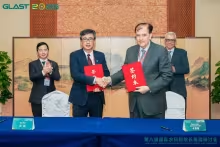
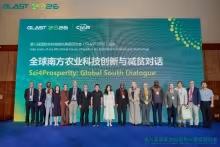
Building on these opportunities, Dr. Bi highlighted the Platform's role in connecting research institutions, policymakers, and value-chain stakeholders around a shared agenda for sustainable agricultural trade. She also referenced its recent activities at GLAST in Sanya, including the launch of its multilingual website, as part of broader efforts to strengthen knowledge exchange, institutional engagement, and practical cooperation between Brazil and China.
A shared agenda for sustainable agrifood value chains
The discussion also brought perspectives from Brazil's private sector. Juliana Lopes, Sustainability Director at AMAGGI, emphasized the importance of aligning sustainability requirements with the operational and economic realities of agricultural production. She highlighted the need for stronger partnerships across value chains, based on shared responsibilities, technical knowledge, and mechanisms to distribute the costs and risks of transitioning to lower-carbon practices.
Fernanda Monteiro, Director of Climate and Energy at CEBDS, presented findings from the Brazilian Agribusiness Coalition's decarbonization roadmap, highlighting key mitigation opportunities and the financing needed to scale their adoption. She emphasized that many of the necessary technologies and practices are already available, making investment and coordinated action essential to accelerating implementation.
Together, these perspectives reinforced the importance of connecting scientific evidence, market incentives, sustainable finance, and international cooperation to advance low-carbon agrifood value chains. This shared vision reflects the Platform's commitment to fostering joint research, institutional dialogue, and practical solutions that strengthen sustainable agricultural trade and cooperation between Brazil and China.
Watch the full panel discussion
The full recording of From Climate Pathways to Farm-Level Action: Trade, Finance and Agrifood Value Chains is available on YouTube.